
AI in video production: what enterprise teams are actually doing in 2026
Enterprise teams using AI for video are splitting into two camps. Pre-production AI is fast, low-risk, and immediately measurable. Synthetic footage is slow, high-risk, and increasingly flagged by legal. Here's where AI actually fits.
The real problem
The three AI video mistakes enterprise teams are making
Pressure to adopt AI is real. But most teams are applying it in the wrong place, with the wrong tools, without a governance framework. These are the three patterns that create risk without delivering results.
The AI-generated footage trap
Teams under pressure to use AI are experimenting with fully AI-generated video footage. The results look synthetic, brand teams reject them, legal flags authenticity disclosure requirements, and the content performs poorly in a market that's increasingly sceptical of AI visuals.
The wrong part of the workflow
Most AI video tools target post-production: auto-editing, AI voiceover, synthetic presenters. But post-production isn't the bottleneck. Briefing, scripting, and storyboarding is where 80% of video production time is lost. AI in the wrong place doesn't fix the actual problem.
No governance framework
Teams piloting AI video tools without a governance policy create compliance risk. Questions about IP ownership, training data consent, talent likeness rights, and synthetic content disclosure don't have clear answers yet. The EU AI Act's synthetic media disclosure requirements take effect in 2026. Teams without a policy are exposed.
AI belongs in pre-production. Not in the footage.
The enterprise teams getting the most value from AI video aren't generating synthetic footage. They're using AI to collapse the pre-production bottleneck. Brief-to-storyboard in 60 seconds. Script generation from a URL. Visual alignment before a single camera rolls. That's where AI is fast, low-risk, and immediately measurable. The footage is still real. The humans are still on screen. Production costs drop because pre-production stops being the constraint.
The responsible approach
The AI video workflow that enterprise teams are actually shipping
Four stages where AI plays a defined role, and one where humans take over entirely. Each stage feeds cleanly into the next.
AI in briefing: from vague request to structured brief
Use AI to turn a paragraph Slack message into a structured video brief: audience, funnel stage, key message, production tier, and distribution channel. What used to take three briefing meetings takes five minutes. The brief quality goes up; the back-and-forth goes down.
AI in scripting: brand-aware script generation
Feed a brand URL and a video concept to an AI model. Get a production script with narrative structure, scene directions, and call-to-action. Review and edit rather than write from scratch. Script time drops from a day to 20 minutes.
AI in storyboarding: visual alignment before production
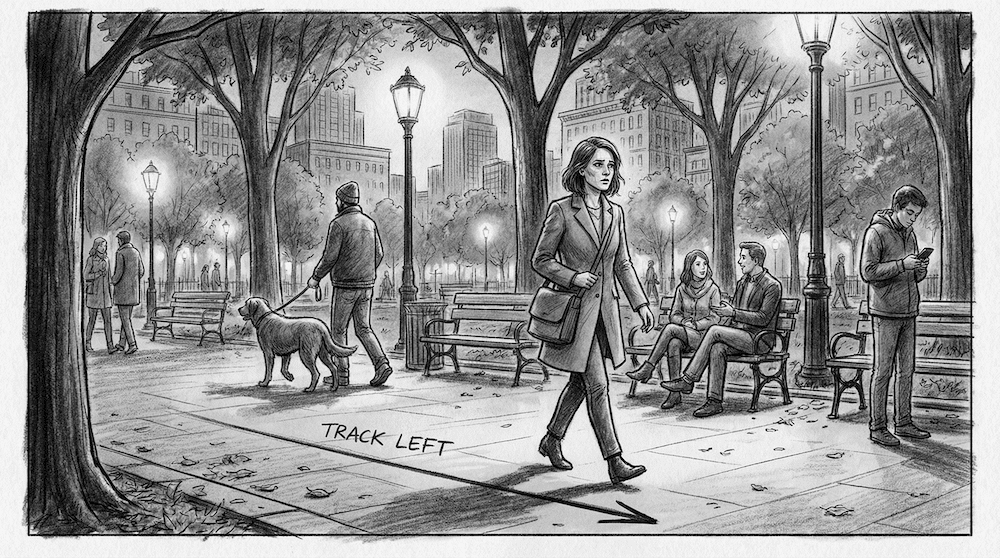
Generate illustrated storyboard panels from the script in 60 seconds. Show stakeholders exactly what will be shot. Get visual sign-off before a camera, crew, or location is booked. The most expensive creative surprises happen on shoot day. This eliminates them.
Storyboard your next video in 60 seconds, then hand the approved board to Shootsta for production.Human production: real footage, AI-prepared
Once the storyboard is approved, the production team has everything they need: shot list, script, visual direction, and stakeholder sign-off. Every creative decision was made in pre-production, so the shoot runs fast. This is where Shootsta and your production team take over.
What works and what doesn't
Responsible AI video vs risky AI video
What teams tell us
The problems this actually solves
Four patterns we hear from marketing, content, and legal teams navigating AI video adoption in 2026.
Head of Content
“Leadership wants us to 'use AI for video' but nobody can tell us what that means in practice. Every vendor has a different answer and half of them sound like they'll get us in trouble with legal.”
AI in pre-production is the safe, fast answer. Brief generation, script drafting, and storyboarding have no synthetic footage, no IP ambiguity, and immediate measurable value.
Digital Marketing Manager
“We tried an AI avatar tool for product explainers. Brand rejected the output. Legal flagged the synthetic disclosure requirement. We're back to square one three months later.”
Pre-production AI doesn't create synthetic content. It creates structured briefs and illustrated storyboards. Real production still happens. The bottleneck moves, not the output format.
VP Marketing
“Our competitors are releasing AI video content constantly. I'm under pressure to match their output but I don't know what's acceptable under our brand guidelines.”
Volume without governance creates brand risk. AI pre-production increases your team's output without changing what the finished video looks like to the audience.
Legal / Compliance (as relayed)
“We need a policy on AI-generated video before we ship anything publicly. But I don't have enough context on what 'AI video' actually means to write one.”
The clearest governance boundary: AI in pre-production (briefs, scripts, storyboards) vs AI-generated footage (synthetic presenters, AI-generated scenes). Different risk profiles, different policies needed.
AI video production: FAQs
Is AI-generated video footage safe to use in enterprise marketing?
It depends on what you're generating. AI-generated B-roll (landscapes, abstract visuals) carries low risk if disclosed. Synthetic presenters or AI face-swaps carry serious legal and brand risk under emerging EU AI Act requirements and FTC guidance. Real footage with AI-assisted pre-production is the lowest-risk path to AI video adoption in 2026.
What does an enterprise AI video governance policy need to cover?
At minimum: which parts of the workflow AI is permitted to assist with; disclosure requirements for any synthetic content published externally; IP ownership rules for AI-generated assets; the approval process before publication; and a review cadence as regulations evolve. Most teams start with a two-page internal policy and expand it as case law develops.
How much faster is AI pre-production compared to traditional pre-production?
For a standard 6-panel storyboard: traditional agency turnaround is 3–5 business days. AI-assisted pre-production takes 60–90 seconds for the initial storyboard, plus 20–30 minutes of review and editing. For teams producing 10+ videos per month, that's weeks of pre-production capacity recovered every quarter.
Does AI video content perform differently in search and social algorithms?
AI-generated footage is increasingly detectable by platform classifiers. YouTube, LinkedIn, and Meta all require disclosure of AI-generated content in ad formats as of 2025. Organic posts with AI-generated visuals are showing early signs of reduced reach on LinkedIn. AI-assisted pre-production with real footage avoids all of these issues.
Where does Shootsta fit in an AI-assisted video workflow?
Shootsta handles the production execution once pre-production is complete: shoot, edit, and delivery in 24–48 hours. The AI pre-production tool generates the storyboard and gets stakeholder sign-off. Shootsta picks up from the approved board. The combination means you can go from brief to finished video faster than most teams can schedule a planning meeting.
Go deeper
Storyboards by video type
How AI pre-production applies across every video format.