

Win the pitch
with a storyboard.
Not a mood board.
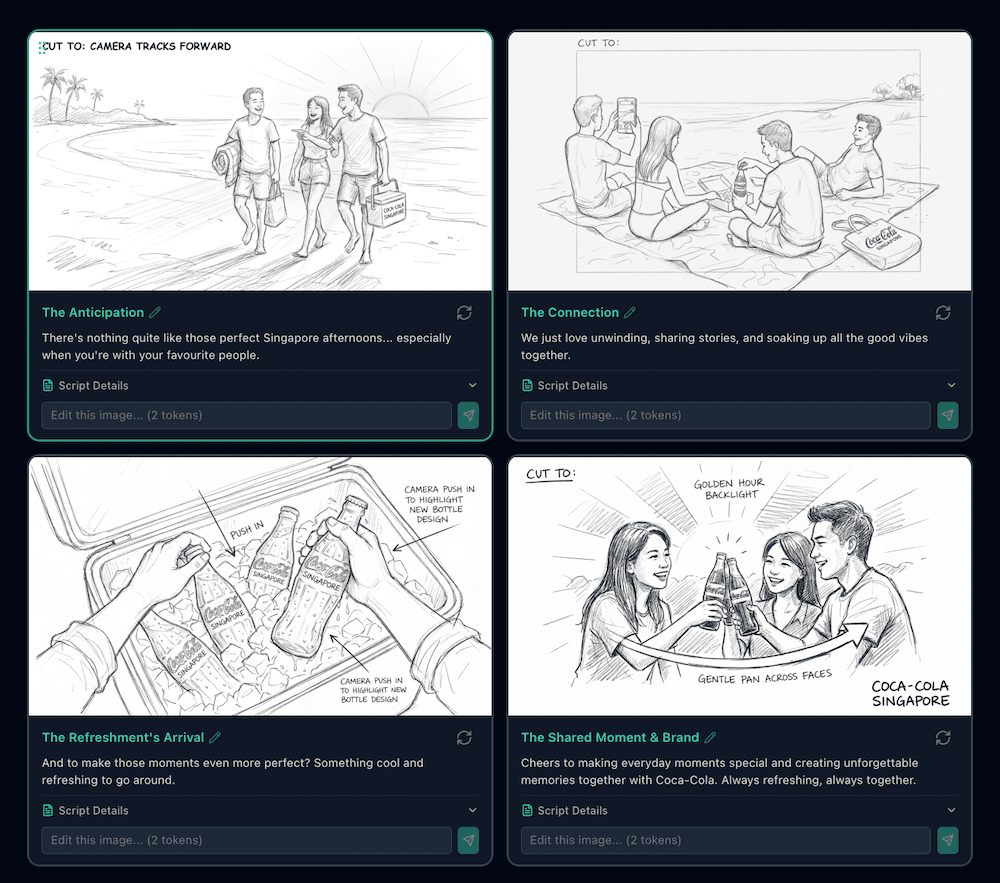
Walk into the room with a six-panel storyboard in your prospect's own brand voice, drawn in under a minute. Before the competing shop has finished their stock-photo mood board, you've handed over an actual visual of the campaign.
The pitch paradox
gency pitch economics have never been worse. You burn a hundred unpaid hours on spec concepts, then compete against three other shops doing the same thing. The client sits through four nearly identical deck flyovers in one week and picks whichever agency looked most prepared. Storyboards change the math. Instead of handing over a mood board stitched from stock photography and a logo mockup, you walk in with an actual visual of what the video will look like, in the client's brand, drawn by AI in the time it takes to scroll through their Instagram.
The edge
What you show up with when every minute is billable
From the prospect's URL to a pitched storyboard in their brand voice. No research block. No onboarding call.
Brand-matched from a URL.
The AI reads your prospect's live site for tone, audience, and product positioning, then drives every panel, caption, and closing frame.
What replaces
- Brand research hours
- Stock-photo mood boards
- The “make it more them” revision round
To try your first pitch board. No credit card. No sign-up.
Panels per storyboard on Pro. Enough for a full hero spot or multi-scene TVC concept.
“We used to burn thirty hours per pitch on spec creative. We're now at thirty minutes, and our win rate is the highest it's been in a decade. The storyboard is the moment the room leans forward.”
A pattern we hear from agency creative directors
Won the pitch? Shootsta produces the finished video within 48 hours.
The compressed week
What a pitch week looks like with a storyboard tool
Hour 1
Storyboard delivered
Paste the prospect's URL. Pick a tier. Get a six-panel storyboard in their brand voice before the kickoff coffee lands.
Day 2
Strategy sharp
The creative direction is locked. Your strategist spends the rest of the week on positioning, not asset production.
Day 4
Deck polished
Drop the storyboard straight into the deck. Regenerate a panel if the partner wants a different angle.
Pitch day
You walk in ahead
Every competing shop shows a mood board of stock photography. You show an actual storyboard of their campaign.
How agencies use it
Four ways to put storyboards in front of a prospect
New business pitches
Scrape the prospect's URL and generate three distinct creative directions in the same afternoon. Walk into the room with options, not a single pitch you're defending.
Responding to RFPs
Every other shop replies with a PDF. You reply with a PDF that includes an actual illustrated storyboard of the campaign. Guess who gets the callback.
Live revisions in the room
The client wants the hero scene to feel warmer. Regenerate the panel during the meeting. Close in the same session instead of scheduling round two.
Credentials and capability decks
Generate boards across three or four existing client brands to show range. Update your credentials deck in an hour, not three weeks.
The objection handler
Common pushback from agency partners, answered.
The objection
Will the client think we used a template?
The answer
The storyboard is brand-matched from their live URL, so every caption, scene, and closing frame reflects their name, audience, and tone. It won't look templated because it's literally drawn for them. Edit any panel to taste before you present.
The objection
What if we already have a creative concept?
The answer
Paste it in. The tool generates the storyboard around your direction rather than overriding it. Use it to turn a one-line concept into a six-panel visual without tying up a senior art director for two days.
The objection
Is this credible for TVC and premium pitches?
The answer
Yes. The TVC tier produces charcoal-style storyboards with camera movement notation and lighting notes, the kind of board a broadcast director would recognise. Social and Brand tiers handle the rest of the brief.
The objection
Can we white-label the output?
The answer
The storyboard is yours. No watermark, no attribution requirement. Export, edit, drop into your deck, and present it under your agency's name.
The objection
What does this cost us across a year of pitches?
The answer
Pro is $49 per month per seat. Agencies typically recover that cost inside the first pitch cycle by reclaiming the hours a senior creative would have spent on spec work.
The objection
Does the AI replace our creative team?
The answer
No. It replaces the twenty hours before the creative team gets involved: the research, moodboarding, and first-pass storyboard. They walk in to a warm brief instead of starting from scratch.
Ready to pitch?
Your next pitch,
drawn by the time
the brief lands.
Generate your first pitch board free. No credit card, no sign-up. Win the next one before your competitors finish their Keynote.